


What follows is the result of a discussion with ChatGPT (ironic, I know) about the slides presented at the Project Oak public meeting presentation on 5/18/2026.
This document analyzes a series of public presentation boards displayed during a community meeting regarding the proposed “Project Oak” data center development in Coweta County, Georgia.
The goal of this analysis is not to advocate either for or against the project, but to:
The presentation itself appears highly polished and strategically structured. Across all slides, the messaging consistently focuses on:
At the same time, several major infrastructure details remain largely absent from the boards themselves, including:
The analysis below reviews each slide individually.
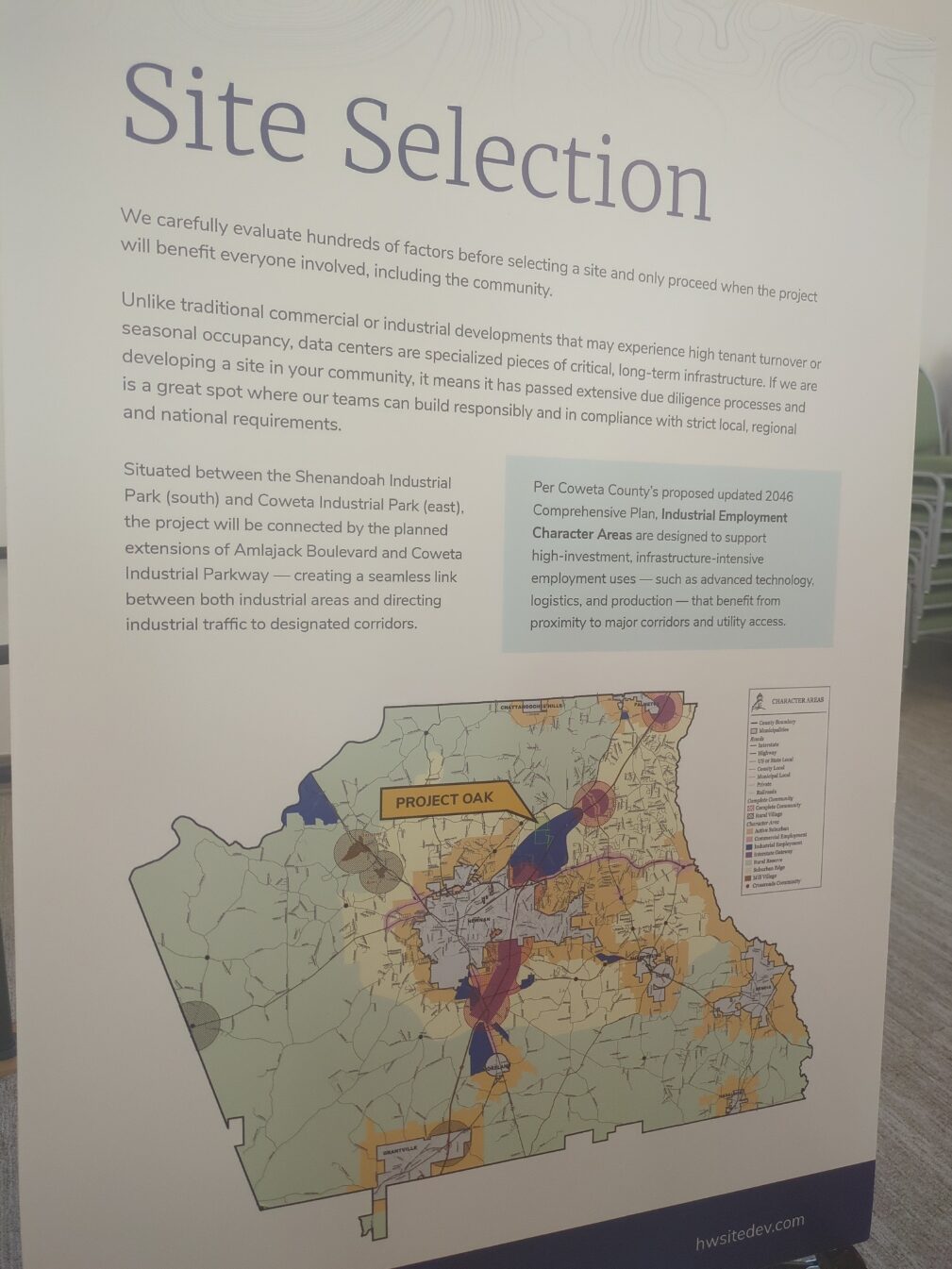
The presentation begins by attempting to establish legitimacy.
The central argument is:
“This project belongs here because the county’s long-term planning framework already envisioned infrastructure-intensive development in this corridor.”
The slide repeatedly references:
The project is framed as:
This is the most important part of the slide.
The developers are effectively arguing:
“The county already planned for infrastructure-intensive uses in this area.”
That does not automatically settle the debate, however.
A comprehensive plan is:
Opponents may still argue that:
The slide references:
This is intended to reassure residents that:
However, much of this language references “planned” infrastructure rather than existing completed infrastructure.
The board contains no meaningful quantitative detail regarding:
The presentation begins by establishing legitimacy before revealing actual scale.
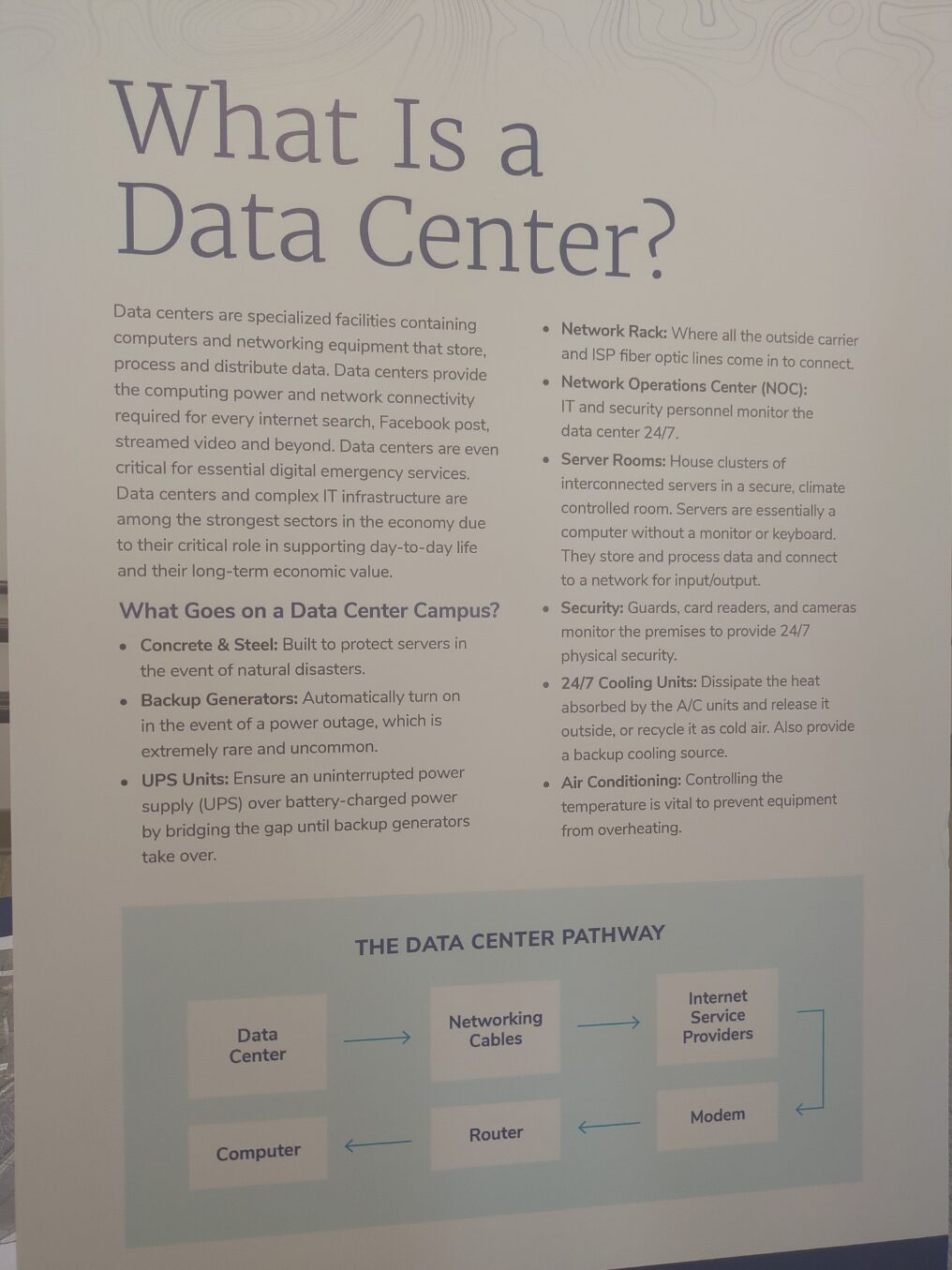
This slide attempts to normalize the concept of a data center and reduce fear.
The presentation frames data centers as:
The emotional goal is:
“This is not a dangerous industrial operation. This is where the internet lives.”
The slide repeatedly connects data centers to:
This positioning attempts to move the project psychologically closer to:
rather than traditional industrial development.
The presentation states:
“Backup generators automatically turn on in the event of a power outage, which is extremely rare and uncommon.”
This wording is carefully constructed.
The slide does not discuss:
The board focuses on outages while avoiding discussion of routine operational testing.
The cooling discussion emphasizes:
However, cooling infrastructure is often one of the largest:
within a data center campus.
These complexities are largely omitted.
The “Data Center Pathway” graphic is intentionally simplistic.
Its purpose is not technical precision.
Its purpose is familiarity.
The audience is encouraged to think:
“This is just part of how the internet works.”
rather than focusing on the scale of the infrastructure.
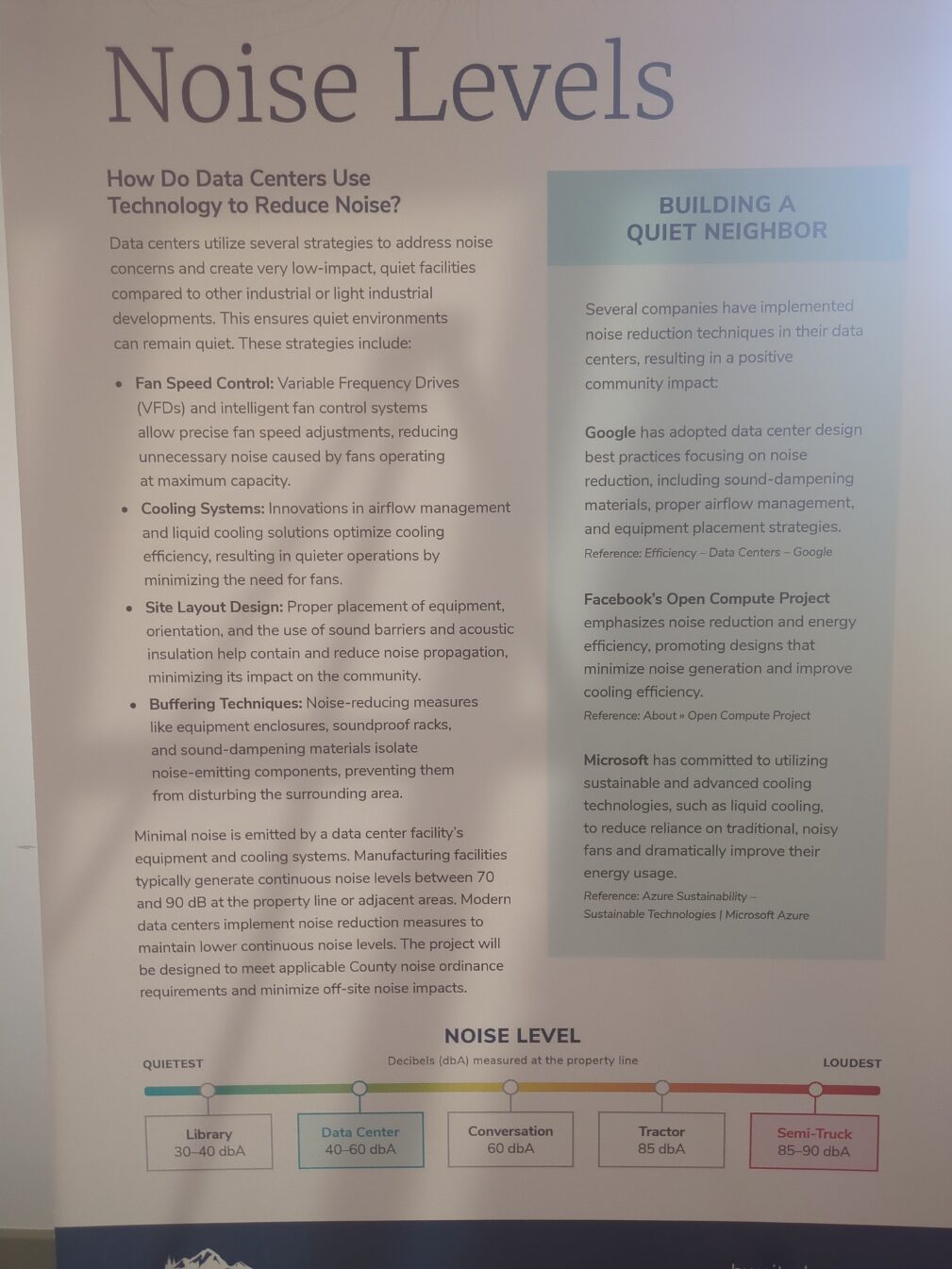
This slide directly addresses one of the most common concerns associated with modern data centers: continuous operational noise.
The presentation argues:
“Modern data centers are quiet, engineered facilities that comply with noise regulations and minimize community impact.”
The most important sentence on the slide is:
“The project will be designed to meet applicable County noise ordinance requirements.”
This is legally careful wording.
It does not claim:
Instead it claims compliance.
The slide compares data center noise to:
This comparison is designed to frame data centers as:
However, the slide does not address an important nuance:
A constant 24/7 mechanical hum can be perceived very differently than intermittent human conversation.
Humans respond differently to:
These issues are not discussed.
The chart references:
“Decibels measured at the property line.”
Important missing context includes:
The slide references:
This is intended to create confidence through association with major technology firms.
However, the slide cites design philosophies rather than measured acoustic outcomes from comparable nearby communities.
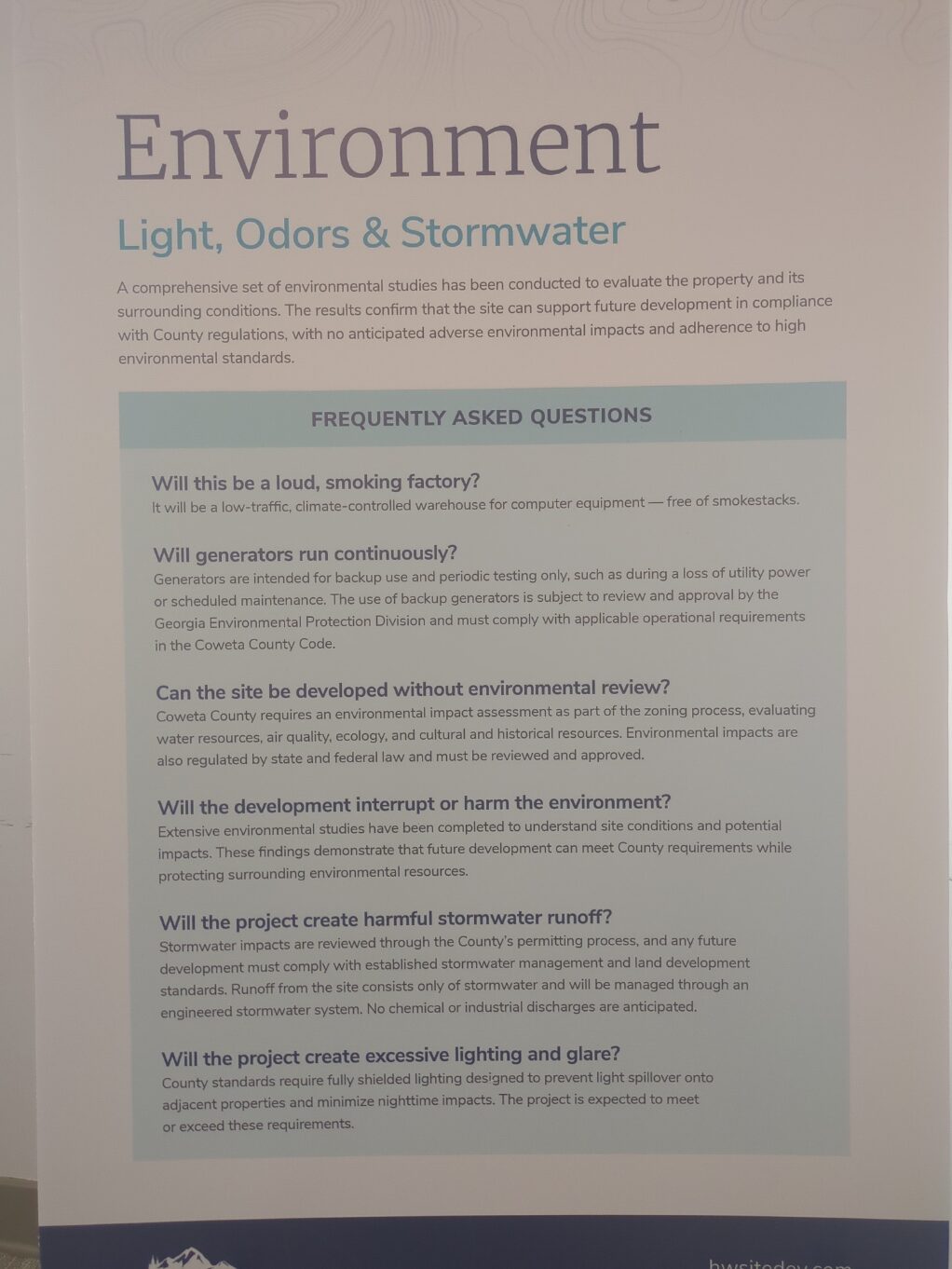
This slide focuses on environmental reassurance.
The central message is:
“This project is regulated, studied, and environmentally manageable.”
The FAQ format itself is revealing.
It suggests the developers are responding directly to concerns already circulating publicly.
The questions focus on:
The first question asks:
“Will this be a loud, smoking factory?”
This is strategically phrased.
It allows the presentation to rebut an exaggerated image rather than addressing more nuanced concerns about:
The slide states:
“No anticipated adverse environmental impacts.”
This does not mean “zero impact.”
In regulatory language, it more commonly means:
The presentation emphasizes:
However, it avoids discussion of:
The slide promises:
This is likely intended to reassure nearby residents concerned about:
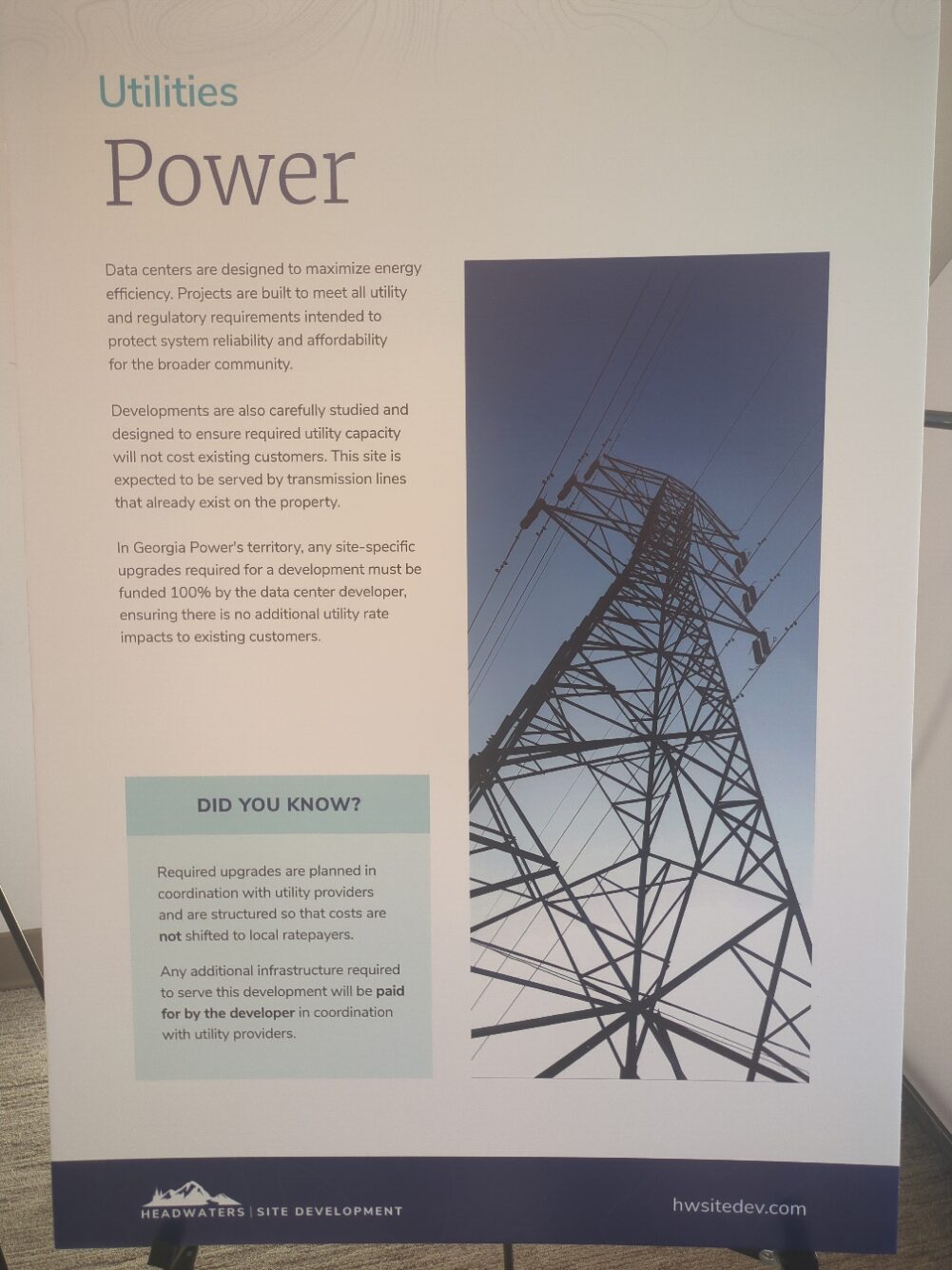
This slide is strategically important because power demand is one of the defining characteristics of modern hyperscale data centers.
The central argument is:
“This project will not burden existing utility customers.”
The slide states:
“This site is expected to be served by transmission lines that already exist on the property.”
This strongly suggests transmission access was a major factor in site selection.
Modern data centers increasingly locate near:
The slide repeatedly emphasizes:
This is intended to counter fears that:
Despite focusing entirely on power infrastructure, the slide never reveals:
This omission becomes increasingly noticeable.
The slide narrowly addresses:
“Who pays for direct infrastructure upgrades?”
It does not address:
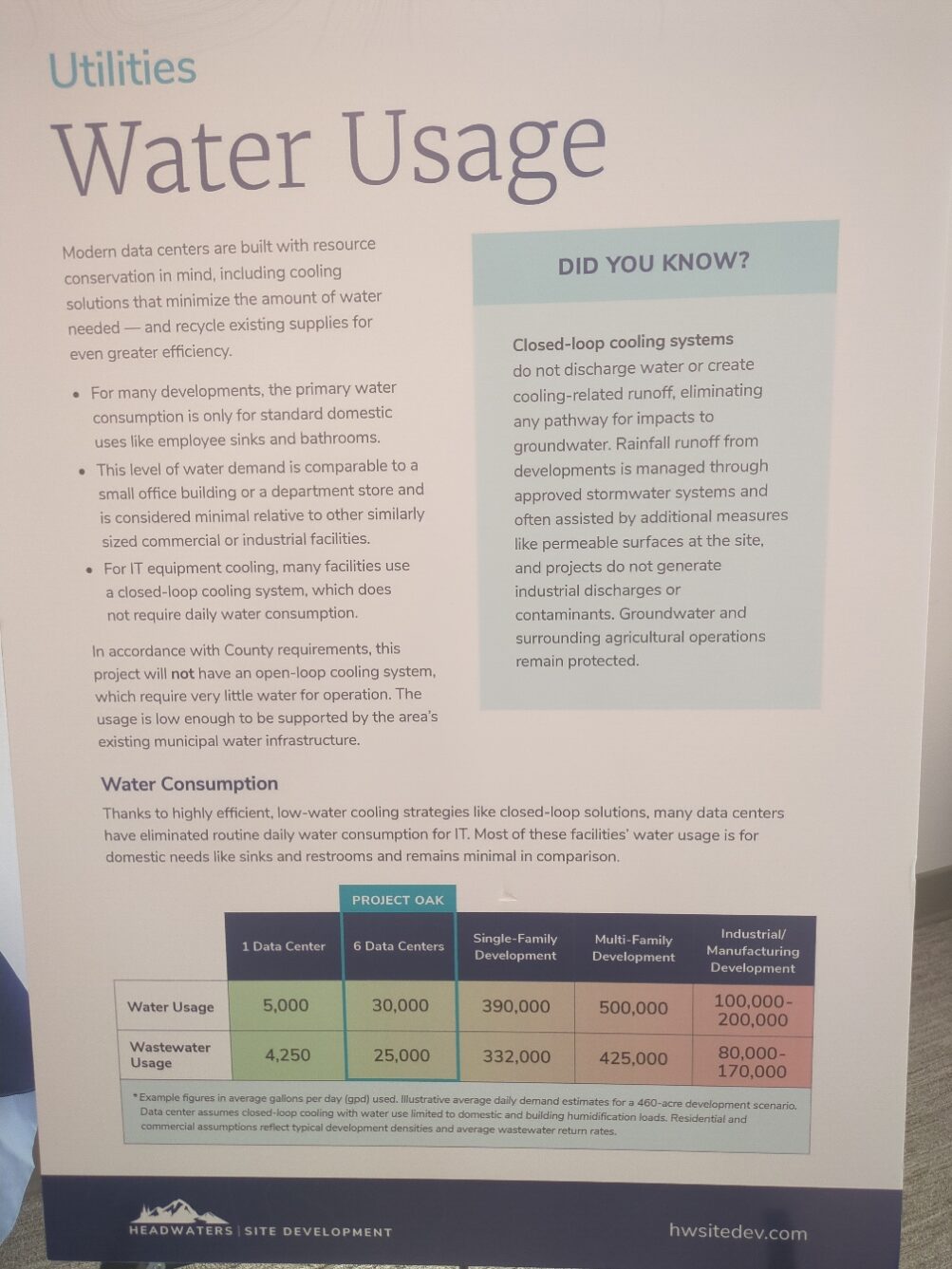
This slide attempts to counter one of the largest emerging national criticisms of data center development: water consumption.
The argument is:
“This project uses surprisingly little water compared to other forms of development.”
The most important technical statement is:
“This project will not have an open-loop cooling system.”
Closed-loop systems generally:
This is a meaningful distinction.
The slide compares:
against:
This comparison is strategically powerful because it reframes the discussion:
“This may use less water than alternative growth patterns.”
The comparison relies heavily on a footnote assumption:
Closed-loop cooling with water use limited primarily to domestic and humidification loads.
If cooling strategies change in the future, water demand could also change.
The slide repeatedly references:
This suggests nearby agricultural and rural concerns were already anticipated.
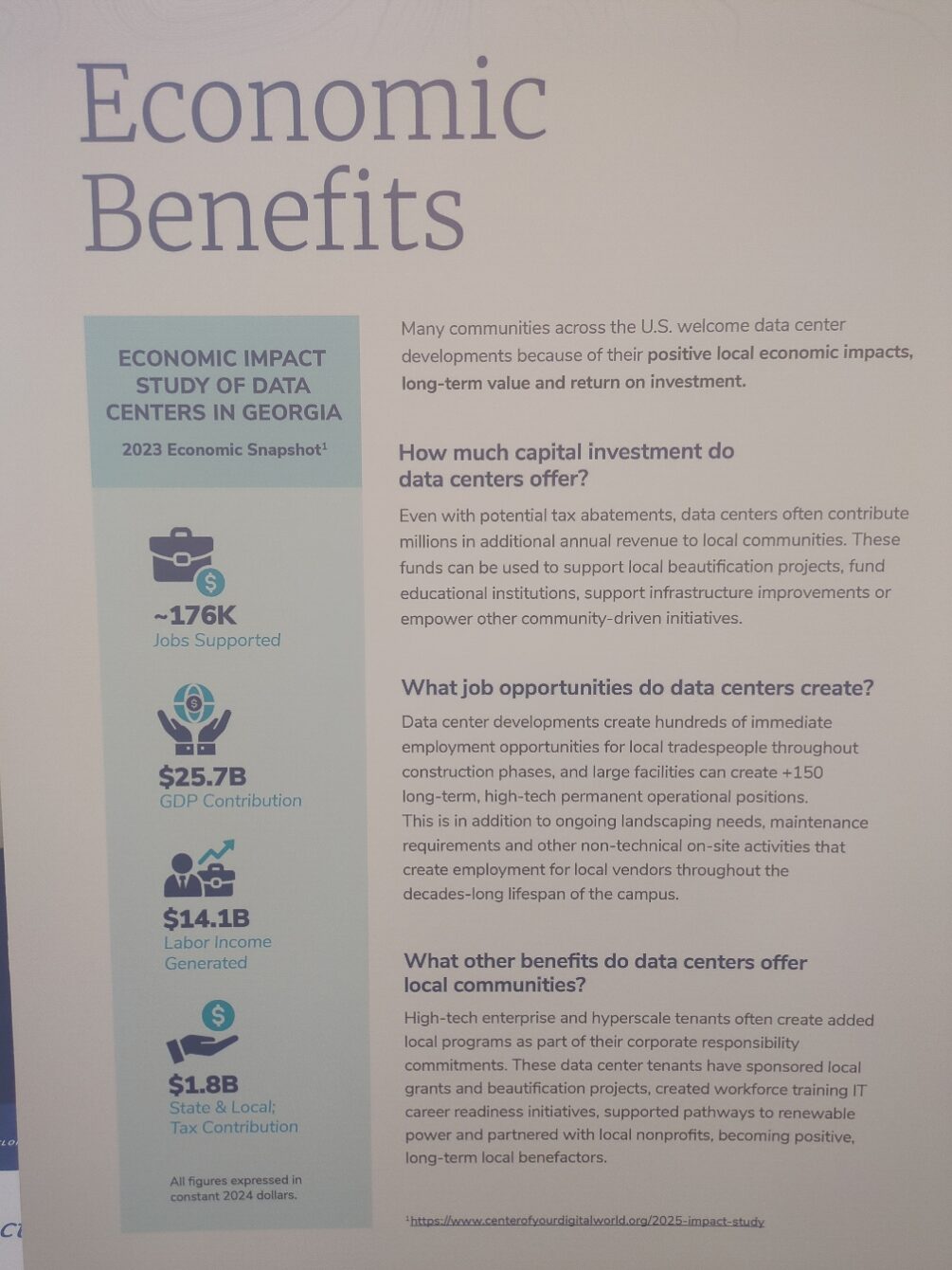
This slide provides the primary justification for why the community should want the project.
The argument is:
“The economic upside outweighs the concerns.”
The slide cites statewide Georgia data center statistics:
These are not project-specific numbers.
The effect is to associate the local proposal with the entire statewide economic ecosystem.
The slide includes an important phrase:
“Even with potential tax abatements…”
This strongly suggests incentives or abatements may be part of the project discussion.
However, the presentation provides no details regarding:
The slide discusses:
It claims:
“Large facilities can create +150 long-term positions.”
However, it does not specify:
The presentation also emphasizes:
This reframes the operator as:
“A long-term civic partner rather than merely a land consumer.”
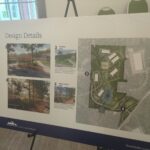
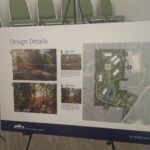

These boards shift almost entirely into visual and emotional reassurance.
The central argument becomes:
“You largely will not see the project.”
The renderings repeatedly emphasize:
This indicates the developers understand that:
may be more emotionally important than technical infrastructure details.
The presentation repeatedly uses phrases such as:
This is strategically cautious language.
The boards avoid unrealistic promises of total invisibility.
One of the most revealing details is the labeled:
“Substation – 10.12 Acres”
This strongly implies substantial long-term electrical demand.
The size of the electrical infrastructure reinforces the scale of the overall campus.
The campus layout suggests:
This is clearly not a small standalone facility.
None of the visual simulations depict:
The visual environment is consistently:
This is deliberate emotional framing.
The presentation follows a highly deliberate progression:
The sequencing is sophisticated and intentional.
The materials:
This does not appear to be a casually assembled industrial pitch.
The most consequential omissions include:
These omissions are notable because they involve some of the largest real-world implications of modern hyperscale infrastructure.
Ultimately, the presentation attempts to reconcile two competing narratives:
“This is low-impact, future-oriented infrastructure that strengthens the local economy.”
“This may permanently transform the corridor into major industrial infrastructure territory.”
Importantly, the presentation does not fully disprove the second concern.
Instead, it argues:
That is a very different argument.
The boards should not be viewed as a technical disclosure package.
They are better understood as:
A carefully engineered community acceptance presentation.
The real operational and infrastructure story likely exists in:
rather than within the presentation boards themselves.


